4 min readNew DelhiUpdated: Mar 27, 2026 04:51 AM IST
While the gas crisis triggered by the West Asia war is hitting Indian automobile manufacturers in multiple ways, the more pronounced impact is in an unexpected segment of the automotive value chain — the paint shop. This is starting to force auto majors to cut production schedules, since a vehicle cannot be delivered without the paint job. The first impact is likely going to be on exports if the situation remains unchanged for another few weeks, industry sources told The Indian Express.
The biggest energy consumer in the painting process is body drying and the paint-curing ovens that are typically powered by natural gas. The reductions in natural gas allocation to industrial consumers means most car makers are left to hunt for alternatives, and looming uncertainty over steady energy supplies. Natural gas is a main energy source in automobile paint shops, often accounting for well over 50% of energy usage, mainly for thermal processes. Apart from powering high-temperature curing ovens for baking paint, gas provides thermal energy for air heating and ventilation, and also for thermal oxidation to neutralise paint solvent emissions.
“If the paint shop goes out of action, that would completely halt the production process in that line, leading to significant production delays,” a senior industry executive said. When car bodies are painted and dried, vaporous substances are generated. To neutralise paint shop solvents and prevent them from harming the environment, the exhaust is cleaned by burning off the substances before releasing the air via a chimney. This is typically done by passing the contaminated air through a bed of ceramic media, where solvent residues are burnt. For this, the air has to be heated to very high temperatures in a short space of time — which is done with natural gas. Electricity is also being used these days, but gas remains the primary energy source.
Automakers also fear that their latest commercial vehicles could be grounded due to uncertainty in the availability of technical grade urea, a key component of Diesel Exhaust Fluid (DEF), a source said. Commercial vehicles use DEF — a 32.5% urea and 67.5% deionised water solution — in Selective Catalytic Reduction (SCR) systems to convert harmful nitrogen oxides (NOx) into nitrogen and water.
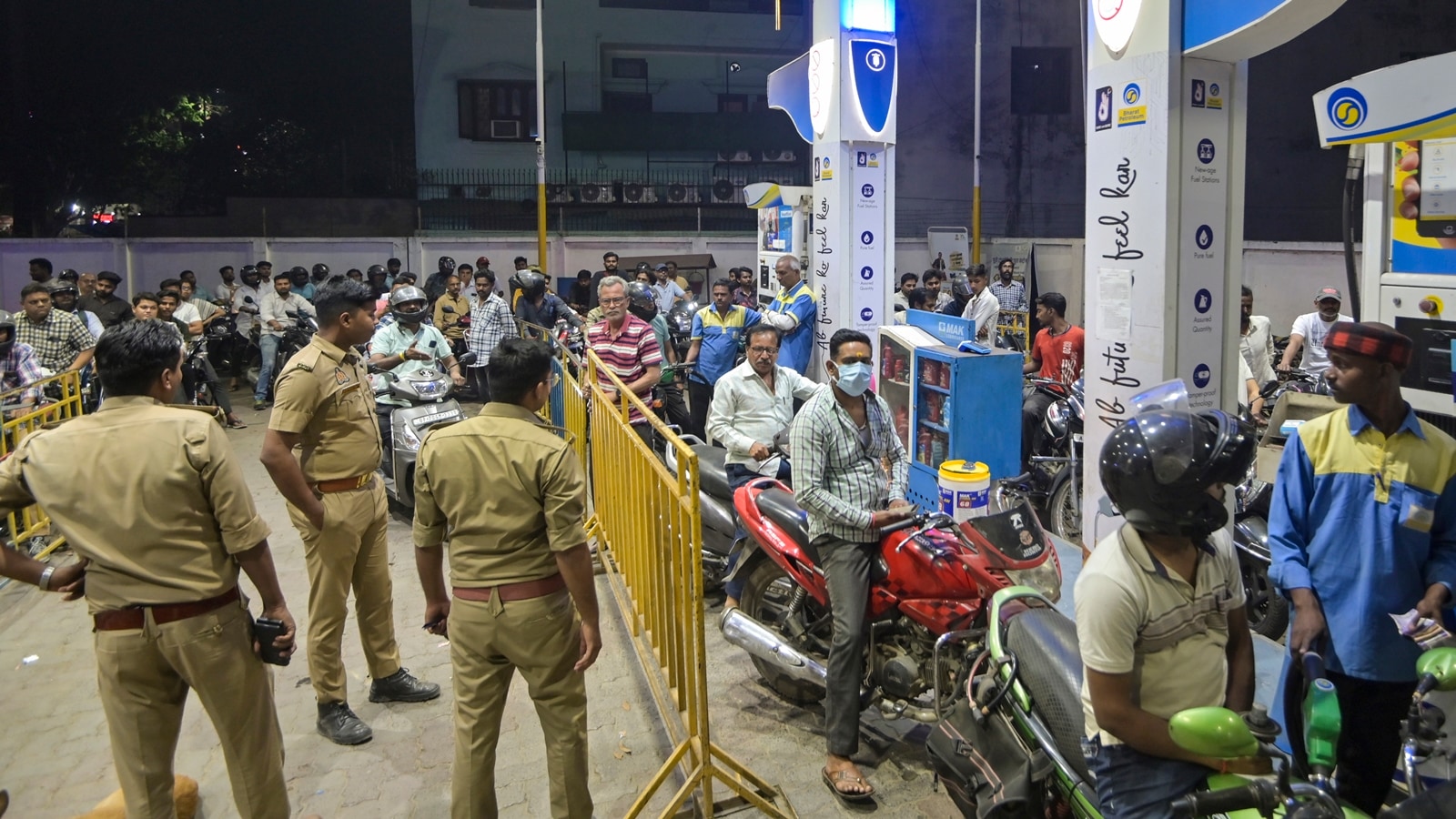 Police personnel stand guard as people queue up at a petrol pump in Prayagraj on Wednesday. (PTI)
India’s urea production is heavily dependent on LNG imports from Qatar, which have been significantly squeezed since the beginning of the war, after QatarEnergy, the country’s state-run energy firm, announced a halt in LNG production amid retaliatory attacks by Iran earlier this month. The shortages are impacting manufacturing plants located in the central, western and southern parts of the country more than those in the north given the higher availability of natural gas in the region, the executive said.
Queries sent to the Ministry of Petroleum and Natural Gas and Society of Indian Automobile Manufacturers (SIAM), the industry’s key association group, have not elicited any response. Not just automakers, but their ancillary suppliers are also facing the brunt of the war-related disruptions. In a letter to the Government earlier this month, the Automotive Component Manufacturers Association of India (ACMA) said, “Members have highlighted emerging concerns regarding the availability of LPG and PNG for industrial use, particularly for foundry, forging and machining units, as well as other applications within the automotive supply chain that rely on these fuels for operational processes.” An executive said, “Many of these problems remain unresolved so far.”


© The Indian Express Pvt Ltd
.